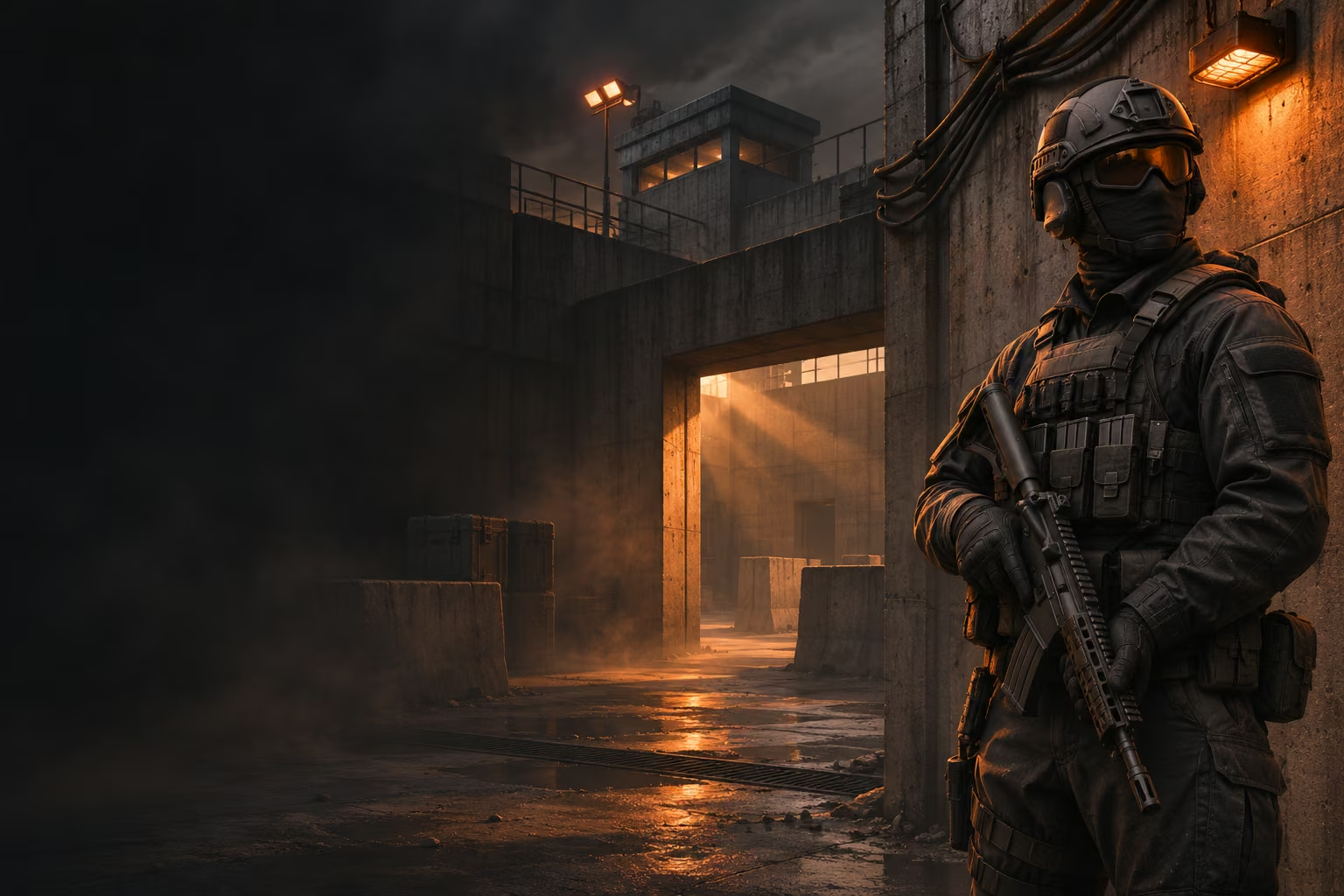
Plan for one likely contact
Crosshair placement is easier to practice when you can explain the contact you expect. As you approach a contested area, identify the position you intend to check first. Choose a path that makes that check manageable instead of exposing yourself to several unrelated threats.
Do not turn this into a promise that every opponent will appear where you predict. The purpose is to reduce unnecessary correction while keeping a clear plan for uncertainty. If several positions remain possible, consider whether information, a teammate, or utility can help before you commit.
Walk a familiar route slowly
Use a practice environment to follow a route you actually take in matches. Stop before each likely engagement and describe the next angle. Prepare your crosshair before moving into view rather than reacting only after you have already crossed the line.
Repeat the route at a pace that lets you notice mistakes. Watch for moments where your attention leaves the expected contact and the crosshair drifts without a reason. Once the route feels deliberate, add realistic movement while preserving the same preparation.
Connect height with position
Avoid treating placement as one fixed line drawn across the entire map. Your viewpoint, the opponent's possible position, changes in elevation, and the route you take all affect the picture. Practice from the positions you will actually use.
Save a few screenshots or demo timestamps from recurring fights. Ask whether you were preparing for the relevant opponent position or merely holding a familiar spot on the screen. Use those examples to adjust the route drill rather than memorizing a disconnected reference point.
Give attention a clear job
A good starting position loses value if your attention is elsewhere at contact. Decide what you are watching and what information will make you change focus. When playing with a teammate, agree who covers the threat you are leaving.
During review, distinguish a placement problem from an attention problem. If your crosshair was prepared but you were processing another cue, adding more aim repetitions may not address the cause. You may need a clearer responsibility or a less demanding position instead.
Review the first moment, not only the final shot
Pause a lost engagement just before the opponent appears. Check your route, the angle you selected, and the adjustment you would need if that expectation was wrong. Then watch whether you continue into a second exposed angle without resetting.
Pick one correction for the next session. It might be preparing the first angle earlier, checking a close position before a distant one, or waiting for support. Evaluate the correction over comparable situations and retain examples where it worked.
Crosshair placement practice should make your movement and expectations more deliberate. It cannot remove every surprise, guarantee a duel, or replace tactical judgment. The best drill is one that addresses an identifiable situation from your matches and gives you a repeatable action when that situation returns.